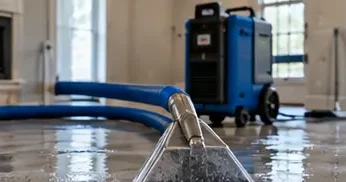
Emergency Water Damage Restoration
Round-the-clock response for burst pipes, appliance failures, storm intrusion and sudden flooding.
Learn more →
Burst pipe, flooded basement, leaking water heater? Every hour matters. Lynnwood Water Restoration removes the water, dries the structure and prevents mold. Licensed, insured and IICRC-certified, and serving Lynnwood and Snohomish County since 2009.
When water gets into your home, the clock starts. Within hours, water wicks into drywall and insulation. Within a day or two, mold can begin to grow. Within days, flooring can cup, warp and fail.
Lynnwood Water Restoration is a local restoration company serving Lynnwood, WA and the surrounding Snohomish County communities. We respond to burst pipes, failed water heaters, washing machine leaks, roof leaks, sewage backups, flooded basements and storm damage at any hour.
Our approach is simple: stop the damage from spreading, remove the water fast, dry the structure completely using moisture measurements instead of guesswork, and document everything so your insurance claim and repairs go smoothly.
Lynnwood’s mix of mid-century ranch homes, newer developments, townhomes and apartments means no two water losses are alike. We plan every job around the building, the materials and the source of the water, not a one-size-fits-all checklist.
What you do right after discovering water can limit the loss. Follow these steps if it is safe, then call us.
Close the fixture shutoff or the main valve. Can’t find it? We’ll help you over the phone.
Keep out of standing water near outlets. Cut power to wet areas at the breaker only if you can reach it dry.
Lift rugs, electronics and small furniture off wet floors. Leave heavy items on wet carpet alone.
Photos and video of the damage and belongings, before anything is moved or thrown out.
A restoration specialist walks you through next steps and sends a crew.
Seven specialized water services, all handled by the same crew from extraction to final drying.
Round-the-clock response for burst pipes, appliance failures, storm intrusion and sudden flooding.
Learn more →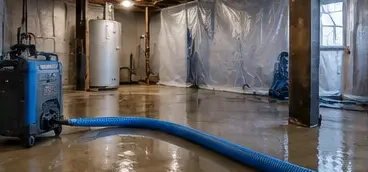
Powerful pumps and extractors remove standing water from carpet, hard floors and lower levels.
Learn more →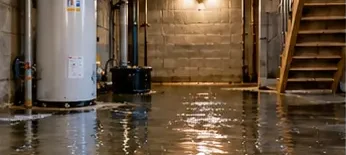
Storm, groundwater and overland flooding cleanup, from water removal through sanitizing and drying.
Learn more →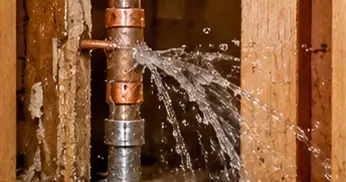
Cleanup and drying after a burst or leaking pipe, including water hidden inside walls and ceilings.
Learn more →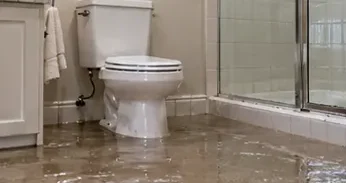
Safe removal and sanitizing after sewer line, toilet and floor drain backups.
Learn more → Extraction, drying and restoration for flooded basements, finished lower levels and crawl spaces.
Learn more →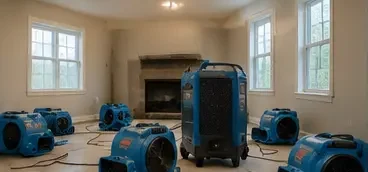
Scientific drying of framing, floors and walls with moisture mapping and daily monitoring.
Learn more →Call us and describe what you are seeing. We will tell you what it likely is and what to do next.
Call (425) 358-4598A documented, step-by-step process that gets your property dry and keeps mold from following.
Water damage often brings other problems with it. We treat the whole loss.
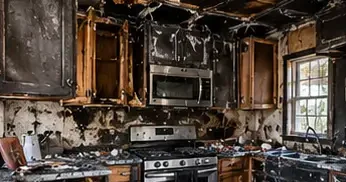
Soot and smoke cleanup, odor removal, firefighting water drying and repairs after house and kitchen fires.
Fire restoration in Lynnwood →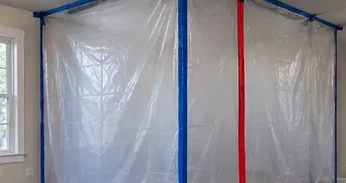
Inspection, containment, HEPA filtration and safe removal, plus fixing the moisture that caused it.
Mold removal in Lynnwood →
Here is what we see most often in Lynnwood and south Snohomish County.
From fall through spring, steady rain saturates soil, overwhelms gutters and finds weak points in aging roofs, windows and foundations.
Many Lynnwood homes were built decades ago. Original water heaters, hoses and shutoff valves fail with little warning.
In two-story homes and townhomes, a small upstairs leak often shows up as a stain on the ceiling below.
Damp crawl spaces and finished basements hold moisture that feeds mold long before anyone notices.
Even short freezes can split pipes in exterior walls, garages and crawl spaces, with the leak starting at thaw.
Apartments and condos along the Highway 99 and City Center corridors often see leaks that travel between units.
Our free water damage cost calculator gives you an estimated restoration range based on the size of the affected area, water category, flooring, drywall damage and how long water has been present.
It is an estimate only. An on-site inspection gives you a firm number, but the calculator helps you understand what drives cost before you call.
Open the Cost Calculator →Water damage insurance help: how to document a loss, what to expect and how we work with your adjuster.
Commercial water damage restoration: apartments, offices, restaurants and retail with minimal downtime.
See our project gallery of drying, extraction, mold and fire restoration work.
Restoration professionals classify every water loss two ways: by how contaminated the water is and by how much of the structure is wet. Knowing the difference explains why two “small leaks” can need very different responses.
| Category | Source examples | What it means |
|---|---|---|
| Category 1 (clean) | Broken supply line, faucet or tub overflow, rain leak through a roof | Originates from a sanitary source. Often dried in place if addressed quickly. |
| Category 2 (gray) | Washing machine or dishwasher discharge, toilet overflow with urine only, sump pump failure | Contains contaminants that can cause illness. Porous materials usually need removal. |
| Category 3 (black) | Sewage backup, flood water, water that has sat for days | Grossly contaminated. Needs protective equipment, removal of porous materials and disinfection. |
Category is not permanent. Clean water left standing for two or three days can degrade into Category 2 or 3 as bacteria grow, which is one more reason fast response saves materials.
Category and class together set the drying plan, the equipment and how long crews stay on site. Learn more on our structural drying page or estimate a range with the cost calculator.
Water damage is a race. This is what typically happens when water is left in place.
These are general timelines. Temperature, humidity and materials all change how quickly damage progresses, and Lynnwood’s damp, cool climate slows natural drying, which favors mold.
Drying a building is applied physics. Water leaves materials by evaporation, and evaporation is controlled by three things: temperature, airflow and humidity. Professional drying manages all three at once.
High-velocity air movers push air across wet surfaces and pull moisture out of materials and into the air.
Without dehumidification, that moisture would settle on cooler surfaces or be reabsorbed by materials. Refrigerant and desiccant dehumidifiers pull it out of the air and out of the building.
Moisture meters, thermal cameras and hygrometers show what is wet, guide equipment placement and prove when materials reach dry standards. Readings are logged each visit and shared with your insurer.
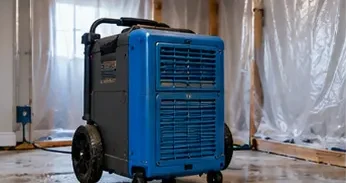
A box fan moves air but does not remove moisture from it, and it does not reach wall cavities, subfloors or insulation. Surfaces can feel dry while framing stays wet, which is how mold ends up in walls weeks later.
Not all water damage announces itself. These are the places we most often find moisture the homeowner did not know about.
Slow supply and drain leaks soak the cabinet base and the subfloor beneath, often unnoticed for months.
A pinhole in a pipe or a failed fitting can wet insulation and studs while the wall surface looks normal.
Roof leaks and upstairs plumbing failures saturate insulation, then show up as a stain long after the damage started.
Water travels beneath laminate, vinyl and hardwood, leaving subfloor wet while the surface looks fine.
High humidity and poor ventilation wet framing and insulation, often the first place mold starts.
Water heater, washer and refrigerator lines leak slowly at connections that are rarely inspected.
Thermal imaging and moisture mapping find these areas without tearing everything apart. If you suspect hidden moisture, see our mold inspection and burst pipe pages.
We know Lynnwood’s streets, its mix of housing and the parts of town where water damage calls come from most. Wherever you are, our crews reach you quickly.
Want to see if we cover your city? Browse the full service area list.
We are based in Lynnwood and respond across south Snohomish County and north King County.
We run a 24/7 emergency line and dispatch as quickly as possible. When you call (425) 358-4598, we give you an arrival window based on where our crews are at that moment.
If it is safe, shut off the water at the main or the fixture, turn off power to wet areas at the breaker (without standing in water), move valuables and rugs off wet floors and take photos and video of the damage.
Water extraction takes a few hours. Structural drying generally takes three to five days, though larger losses and dense materials such as hardwood can take longer. Repairs after drying add time depending on how much was removed.
Yes. We document the loss with photos, moisture readings and drying logs, and we communicate with your adjuster. Coverage decisions belong to your insurer and we never promise approval.
Mold can begin to grow within 24 to 48 hours on damp organic materials such as drywall, wood and carpet pad. That is why fast extraction and complete drying are so important.
Often, when the water is clean and drying starts quickly. Contaminated water from sewage or floods usually means porous materials such as carpet, pad and drywall must be removed.
Yes. Water damage often leads to mold, and fire damage usually includes water from firefighting. We handle water, fire and smoke, and mold under one team.
Yes. We serve Edmonds, Mountlake Terrace, Mill Creek, Bothell, Everett, Mukilteo, Shoreline and other nearby communities. See our service areas page for the full list.
Every hour matters. Call now and talk to a restoration specialist.
Call (425) 358-4598